


What Changed For Us
In twenty years of working in finance, I have learned that the most expensive problems rarely announce themselves.
They accumulate quietly in budget lines nobody questions, in processes that have never been challenged, and in assumptions that have never been tested. My most recent lesson came from an unlikely source: a new HSE officer who joined our team two years ago. Within three months, she had done something no one before her had thought to do.
She sat down with me and translated our safety programme into a language I actually spoke — the language of cost, risk, and return.
What she showed me fundamentally changed how I think about safety.
The cost we all think we understand
Like most CFOs, I knew safety had a cost. We budgeted for it annually. First aid courses, compliance documentation, the occasional external audit. Clean lines, predictable spend. I thought we had it under control.
What I did not see was everything sitting beneath those lines.
So, she walked me through the numbers LTI and TRIR numbers.
Neither figure was alarming on its own. But when she mapped them against what each incident was actually costing us, the picture shifted.
Direct costs, like treatment, compensation claims, and regulatory exposure, were the visible part. But the indirect costs did more damage: unplanned downtime, productivity losses from that downtime, replacement and retraining of affected employees. OSHA research she cited suggests indirect costs are often several times higher than direct ones — commonly estimated in the 3–5x range. An incident with EUR 50,000 in visible costs could easily carry a total financial impact exceeding EUR 200,000.
We had averaged six recordable incidents per year over the past three years. The financial implications were not hard to calculate.

Our Lost Time Injury Rate (LTIR) was sitting at 4.2 per million working hours.
Our Total Recordable Injury Rate (TRIR) was 7.8.
Indirect Costs: 3-5x Higher
The human capital that depreciates faster than our forklifts
Then we talked about something genuinely thought provoking —the concept of the forgetting curve.
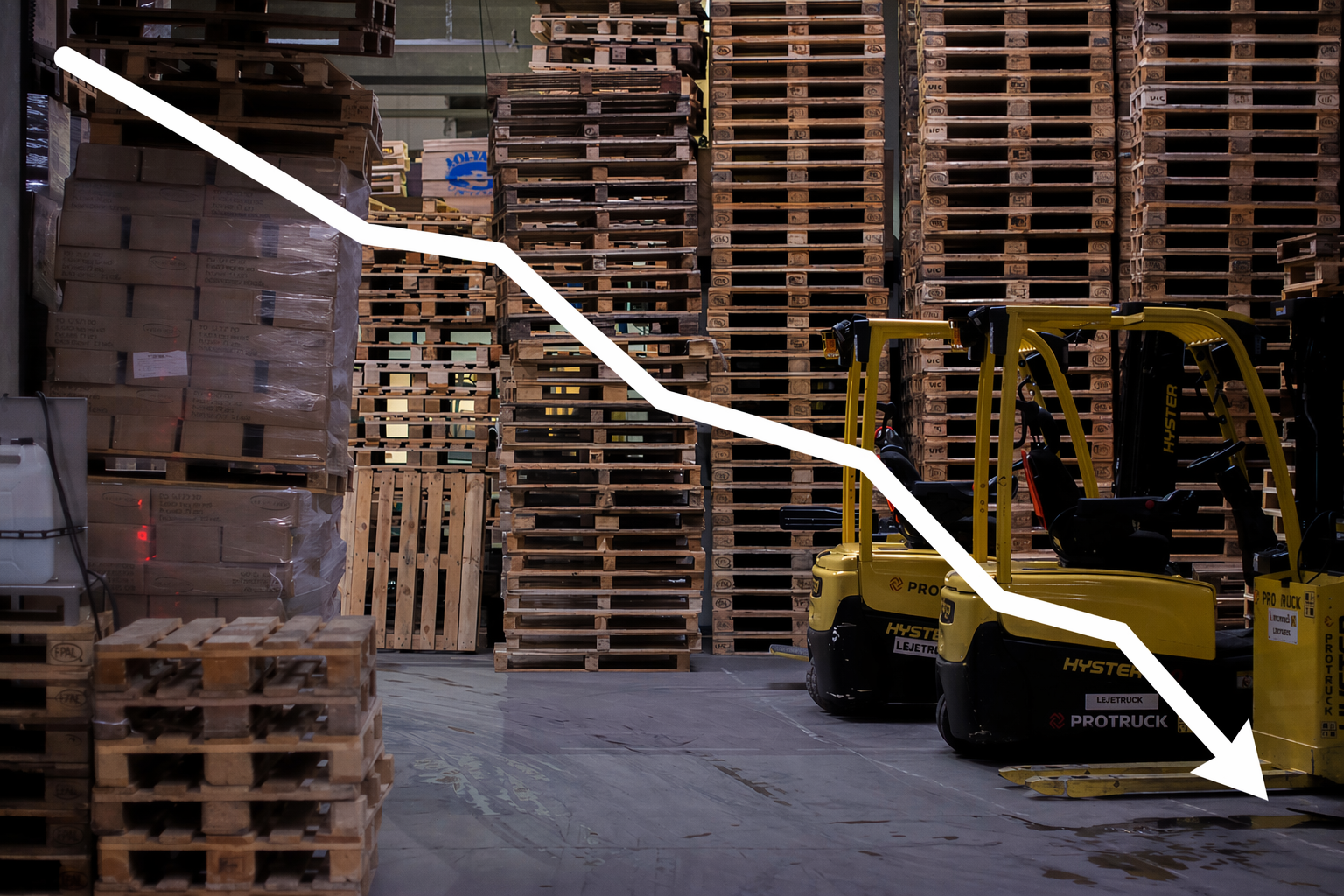
Essentially, it posits that if you are in a high-stakes situation, knowledge that is not regularly reinforced drops by as much as 50% within 90 days of a training event. Half value, gone in days. She asked me a question I could not answer: If I authorised the purchase of forklifts that lost half their functional capacity every three months, how long would the board tolerate it?
We were buying certificates once a year and letting the actual readiness evaporate in between.
If I authorised the purchase of forklifts that lost half their functional capacity every three months, how long would the board tolerate it?


The KPIs I was not paying close enough attention to
Our safety KPIs were not just operational metrics.
Under CSRD and GRI frameworks, they were being disclosed publicly and benchmarked against our peers.
Our insurers were pricing our premiums against our LTIR and TRIR history at every renewal.
Our ESG rating, which feeds directly into our access to green financing and certain grant programmes, carried our safety performance as a material input.
It’s clear to me now. Poor safety numbers are not just an HSE problem. Not when they can weaken a company’s financial position from several directions at once.
She made one more point that stuck with me: the chain runs in both directions.
- Better training leads to better behaviour in emergencies.
- Better behaviour reduces injury rates.
- Lower injury rates reduce cost per employee, improve our KPI disclosures, and strengthen our ESG profile.
This is a CFO-level value chain that most of us have left in the hands of HR and HSE without ever asking whether it was optimised.
Where we were going wrong
Her diagnosis was direct. We were investing heavily in a single annual event and almost nothing in the system surrounding it.
One full-day first aid course per year, well-run and certified. Then nothing.
No reinforcement.
No near-miss logging.
No structured data coming back to inform future decisions.
We were buying the training and skipping the infrastructure.


What We Changed
We introduced Action-cards® across our facilities.
The concept was an ideal fit: durable, physical emergency response cards that guide anyone through a crisis step by step, without relying on memory, apps, or connectivity.
Weather-resistant, built for industrial environments, and designed to be used under pressure by anyone. Instead of one expensive annual course, our teams now run short, scenario-based micro-training sessions throughout the year, using the cards as the guide.
The same — if not better — level of preparedness, at approximately 30–40% lower cost than our previous setup. Incident documentation was where the financial case became undeniable. Every card set carries a QR code.
What I would tell other CFOs
Most companies are not under-spending on safety. They are spending in the wrong places. A large one-time investment in training, repeated annually, without the systems to reinforce it, document it, or learn from it, is expensive and largely ineffective.
The smarter model is a lower ongoing investment in tools that keep preparedness high year-round and generate the data needed to improve continuously. Action-cards® and AC-Analytics® cost a fraction of the traditional approach and deliver more: better response performance, cleaner KPI data, and a defensible ESG safety record.
When you can show the board that safety is not a cost but a compressor for insurance premiums and downtime, the conversation shifts from “How much?” to “How fast?”
It took a sharp HSE officer to show me what I had been missing. I suspect I am not the only CFO who needed that conversation.
Important Note:
*** Based on conversations and experiences with finance leaders at industrial Action-cards® clients.
*** Specific figures are representative of the pattern observed across implementations.
Action-cards® are physical emergency response card sets with built-in QR incident reporting and AC-Analytics® integration.