


Team building that still works on Monday morning
Your team trains for the hard stuff together – where every second counts.
- One team-building day
- Micro-training whenever it suits you
- Your team runs it on its own afterwards
The call is free, with no obligation.

Ivan T. Herrmann
Former surf lifeguard & owner of Action-cards®
What I know — and why
As a safety advisor – and from years of handling real-life emergencies as a surf lifeguard:
- A team bonds best when it trains on what genuinely matters - not on a go-kart track.
- Our exercises show who takes the lead and who the others listen to – and give the team something concrete to debrief.
- Teams that practise get better at clear communication, effective role allocation and giving each other feedback.
- A team isn’t built on a single course. Short, regular training sessions keep the collaboration going – and the skills with it.
For the manager who has a team and wants it to hold together when it counts. What makes this unique is that the team practises working together in a situation where it genuinely matters – and can keep practising afterwards, without a facilitator. A team that works better together is what you take home.

A group’s ability to work together and a shared understanding of its members’ strengths and weaknesses are important for achieving the best possible outcome.
Often, these skills are even more important than the skills of any individual member.
Søren M., former head of the Training Section at the Danish Frogman Corps
The most rehearsed team wins
In August 2015, you could get 5,000 to 1 on Leicester City winning the Premier League – the longest odds in the division, by a distance. The sixth-lowest wage bill in the league. No superstars. Nine months later they were champions, ten points clear of Arsenal.
Ask how they did it and you get more or less the same answer in different words: they weren’t the eleven most talented players, they were the most rehearsed. Every player knew their role, everyone knew what the others would do, and they positioned themselves accordingly. A team far greater than the sum of its individual players.
Hold that thought. Because that is exactly where a lot of team building falls short.
From the escape room to Monday morning
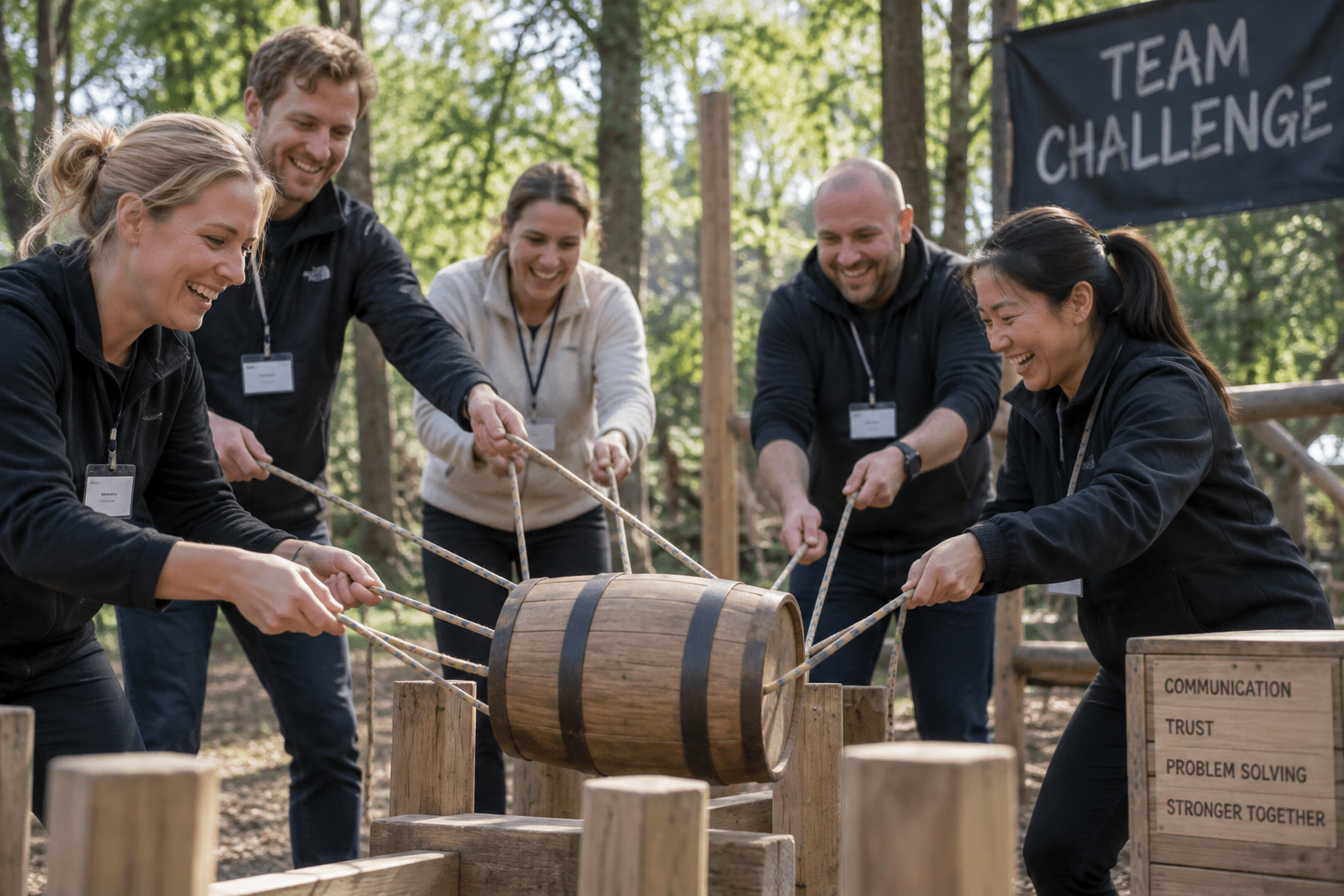
Most companies have tried team building. Go-karting, an escape room, a day in the woods with ropes and barrels. People enjoy it, and there’s nothing wrong with that – a team that has laughed together and learned something new about each other often gets on better, too.
But by Monday morning, there isn’t necessarily much left. What the team experienced together was fun – but it often looks nothing like what they face in their day-to-day work, so it’s hard to carry over.

This is the Leicester point, turned on its head. Collaboration sticks better when it’s trained around something that matters, in something that resembles real life. Footballers don’t build their understanding at the go-kart track; they build it by running the same moves in the same roles until the pattern holds under pressure.
You don’t rise to the occasion. You fall to the level of your training. A warehouse is not a football pitch, and we won’t pretend the circumstances are identical – but the mechanism is the same: a group becomes a team by rehearsing the hard part together, not just the fun part.
What makes team building with Action-cards® for robust emergency readiness unique is that the team practises leadership, feedback and collaboration in an emergency, where everyone has a role and the team debriefs together after every round. The cards carry the technical content, so the team can keep going on its own afterwards. That’s a combination you won’t find at the go-kart track or in an escape room.
The hard part makes the best exercise
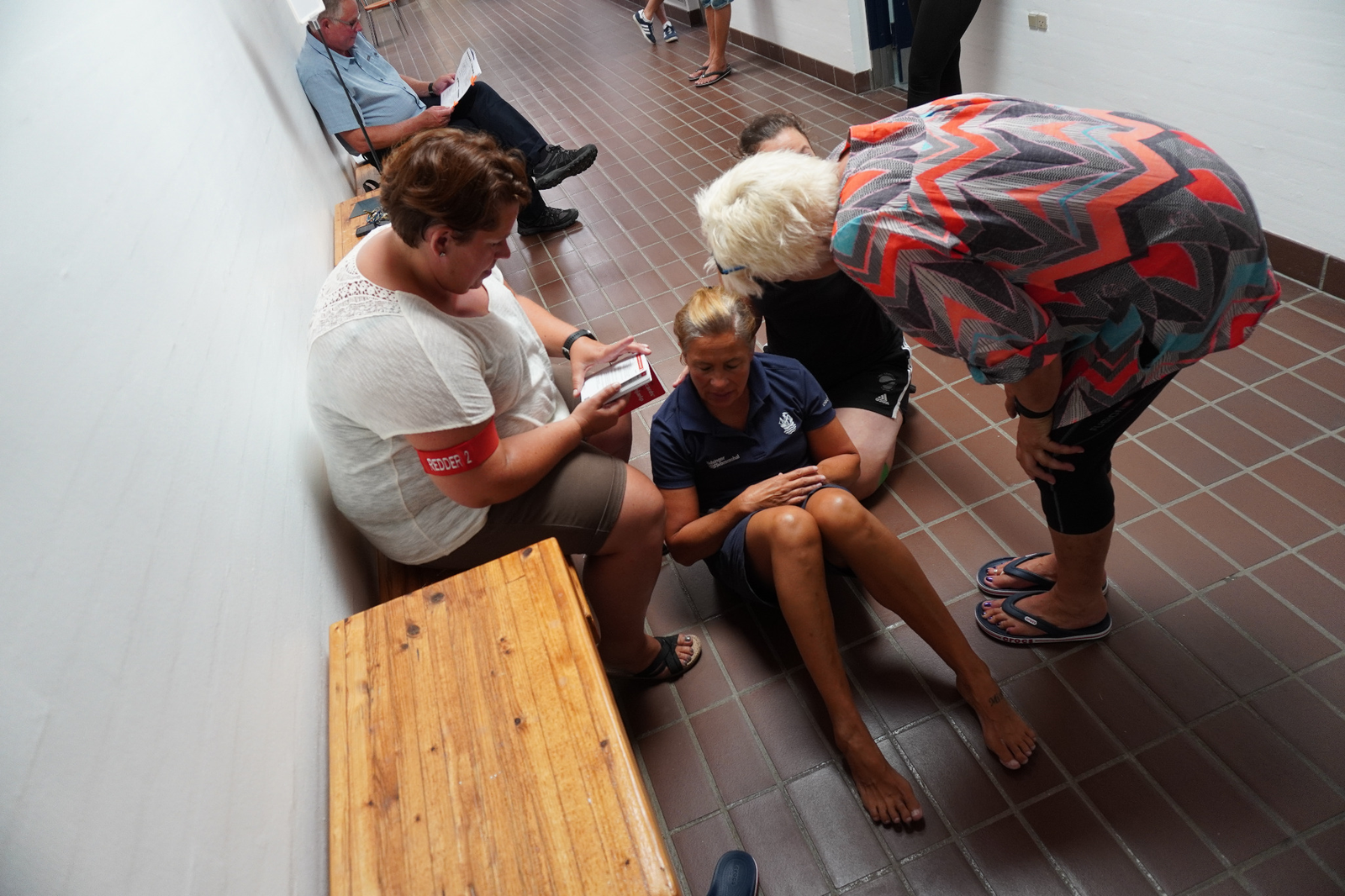
Many workplaces have an agreement about who takes over if someone collapses. But the designated person is often somewhere else – and the rest are left looking at each other.
An emergency is one of the toughest tests a team can face. There’s little time to agree, and rarely anyone to ask or anyone who can take over. That’s exactly why it’s such a good thing to practise.
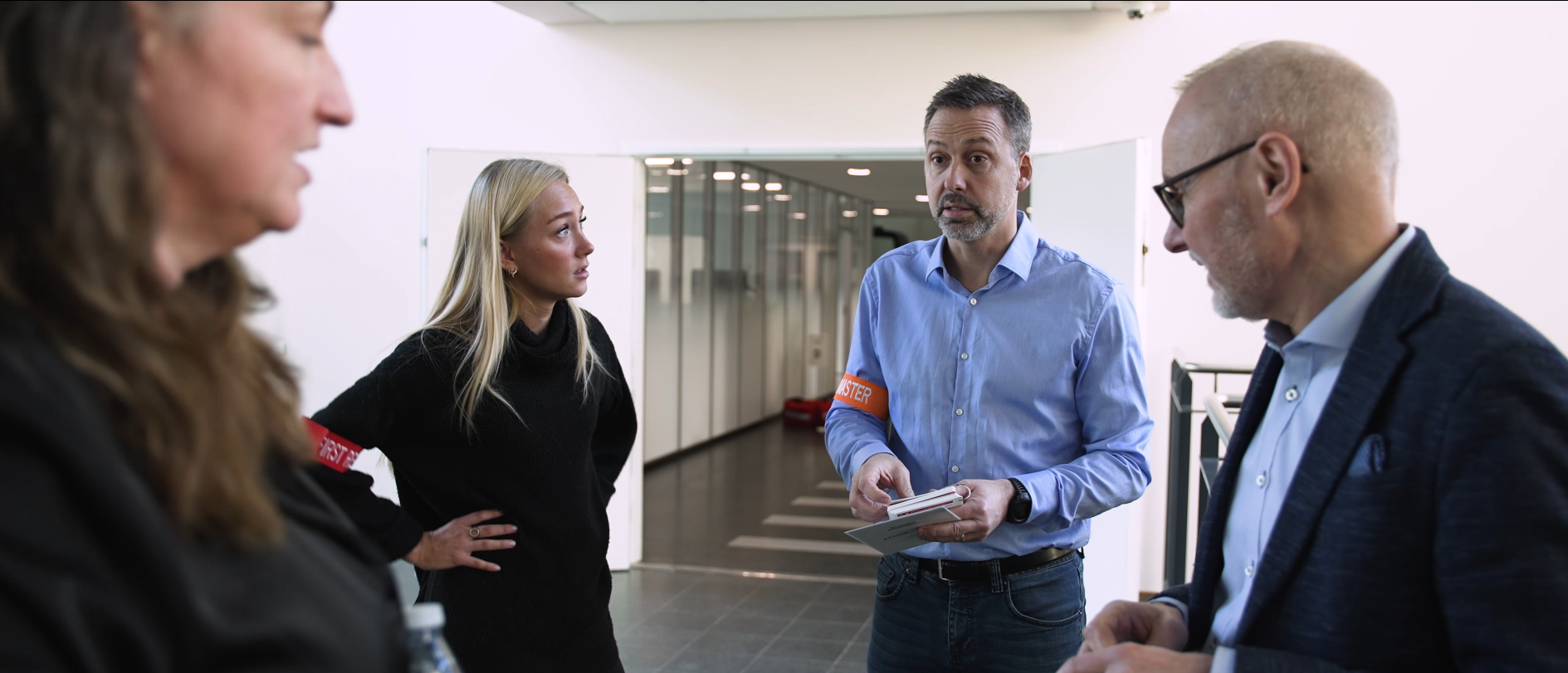
When the team runs a scenario with Action-cards®, the card holds the details. That frees the team to focus on what’s genuinely hard: talking to each other, sharing out the roles and daring to take the first step. That’s where the collaboration training happens – not in spite of the serious content, but because of it. To make the exercise work, the team has to communicate clearly, trust each other and let someone take the lead – and back them up.
One day to lay the foundation – and a rhythm to keep it going
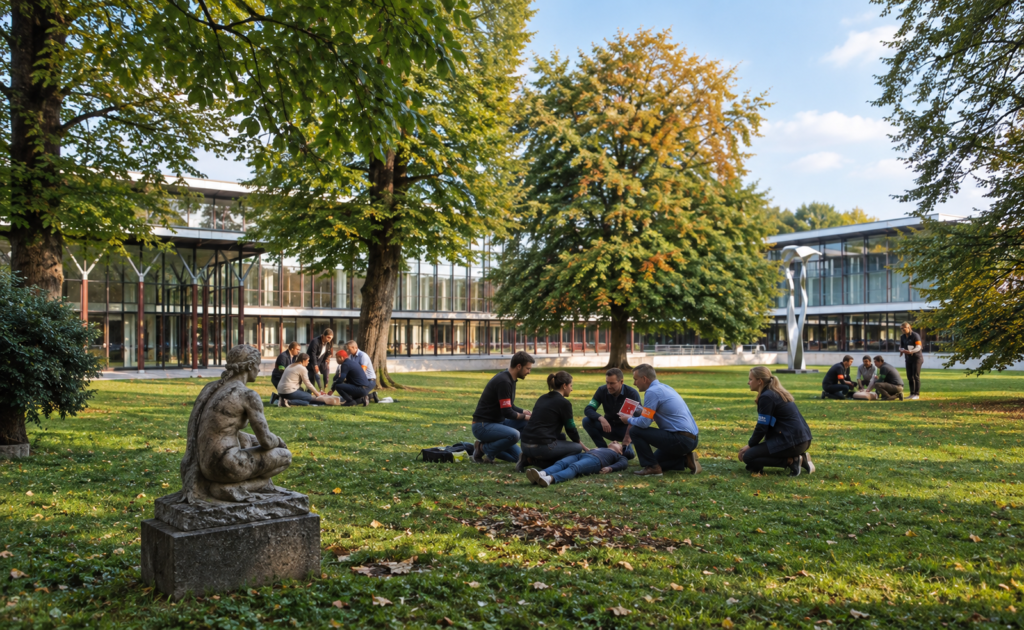
It starts with a single intro day with the whole team present. We don’t build a tower out of spaghetti – we solve emergencies together, in scenarios the team could actually face. This is where the team finds its roles and feels what a scenario is really like when you’re in the middle of it with your colleagues.
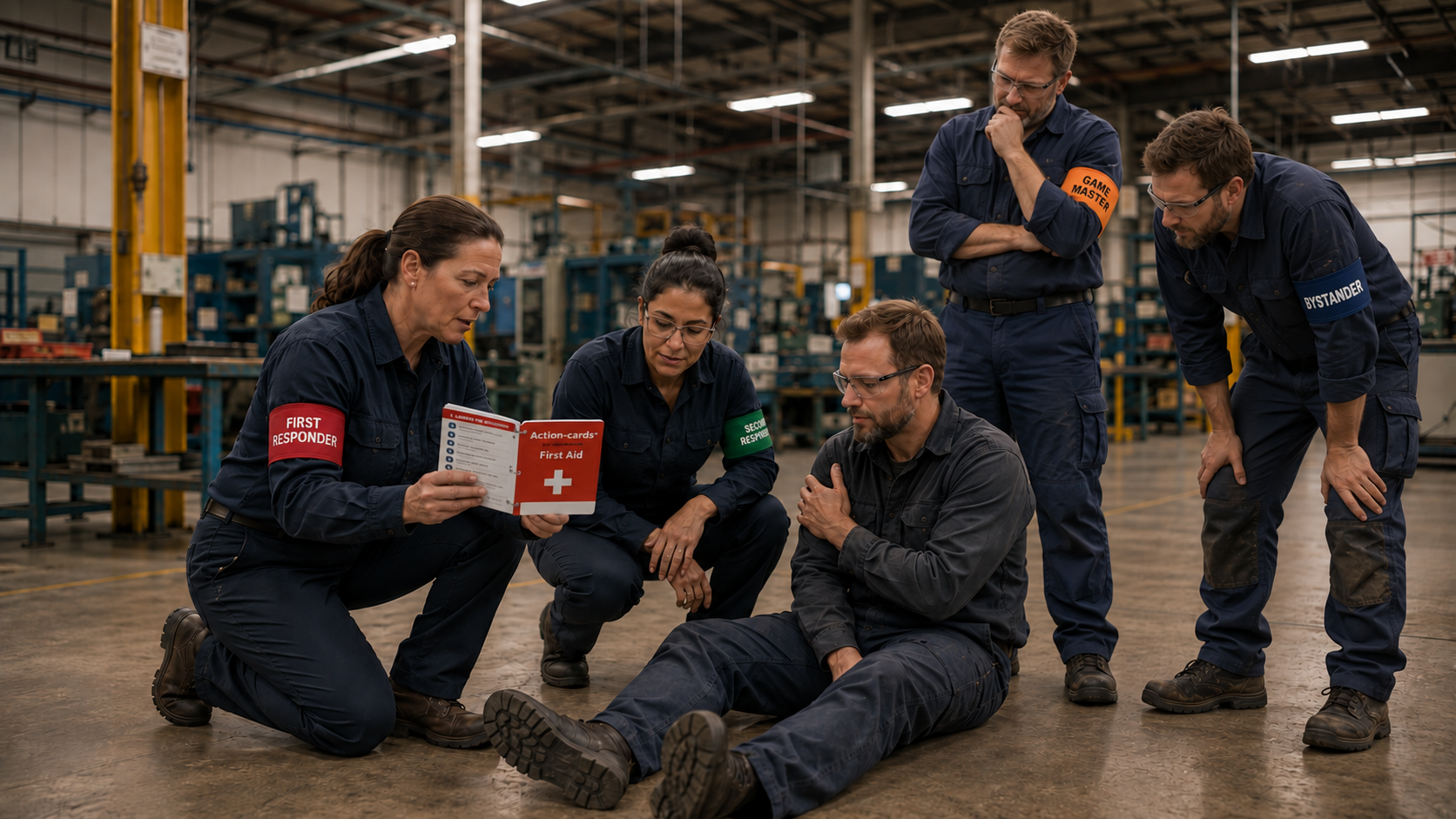
But the day isn’t the point in itself. A team isn’t built in a day – not even at Leicester. The point is what happens afterwards. The team meets again as often as you like – our suggestion is once a quarter. This time for just fifteen minutes. No coach trip, no external facilitator. Just the team, a set of Action-cards® and one scenario: a colleague has collapsed, a hand is caught in a machine, a machine has caught fire. One person reads out what needs to happen – step by step. One acts. One calls the emergency number and says the address out loud. Then you swap roles and run the scenario again.
What your team takes home
The course is built around four things that determine how well a group solves a task together – an approach backed by a former head of training in one of the Danish Armed Forces’ special forces units:
- Someone has to dare to lead – and the others have to let them. One person says: this is how we do it. The others follow. If you disagree, you have that conversation afterwards, not in the middle of the task. It's a discipline many teams have never practised.
- The formal and the informal leader. Many teams have both an appointed leader and someone people actually listen to. The exercise makes it visible whether they're the same person – and then you can talk about it.
- Human understanding. The ability to see and use both your own strengths and those of others. The exercise shows where it already exists in the team – and where there's room to grow.
- Better at the unknown. A team that has practised a range of scenarios finds it easier to handle new and unfamiliar situations than a team that has practised the same thing over and over.
None of this is about first aid as such. In fact, these are topics you’d often come across on a leadership course.
And it’s what several of our customers tell us once they’ve tried it: the team stands closer together afterwards – and finds it easier to talk about everything else.
At the same time, the model is cheap to keep going: even with fifteen minutes every quarter, it costs far less than a full-day outing with a facilitator and catering.
I actually booked it for safety’s sake. But what I took home was a better team. Within the first fifteen minutes I could feel my people standing closer together – they took responsibility, they backed each other up, and they talked more easily about everything else afterwards. I’ve spent far more money on team building that was forgotten by Monday morning. This one stuck – and one day it might save one of us.
Thies, manager.
You don't have to wait for a course
The good thing about Action-cards® is that you’re the one who can set it in motion – not a procurement department, not the annual plan.
The model is simple: start with a single intro day where the team practises its first scenarios together and finds its roles. After that, you keep it going yourselves with short micro-training sessions, as often as you like – fifteen minutes every quarter is a good place to start. Your health and safety representative is the obvious ally for building it into the rhythm, but it starts with you, the one who has the team.
Remember that Leicester didn’t win because they bought the best player. They won because eleven people rehearsed one hard thing until they could do it without looking. Your team can have the same – a good start together and a rhythm that lasts.
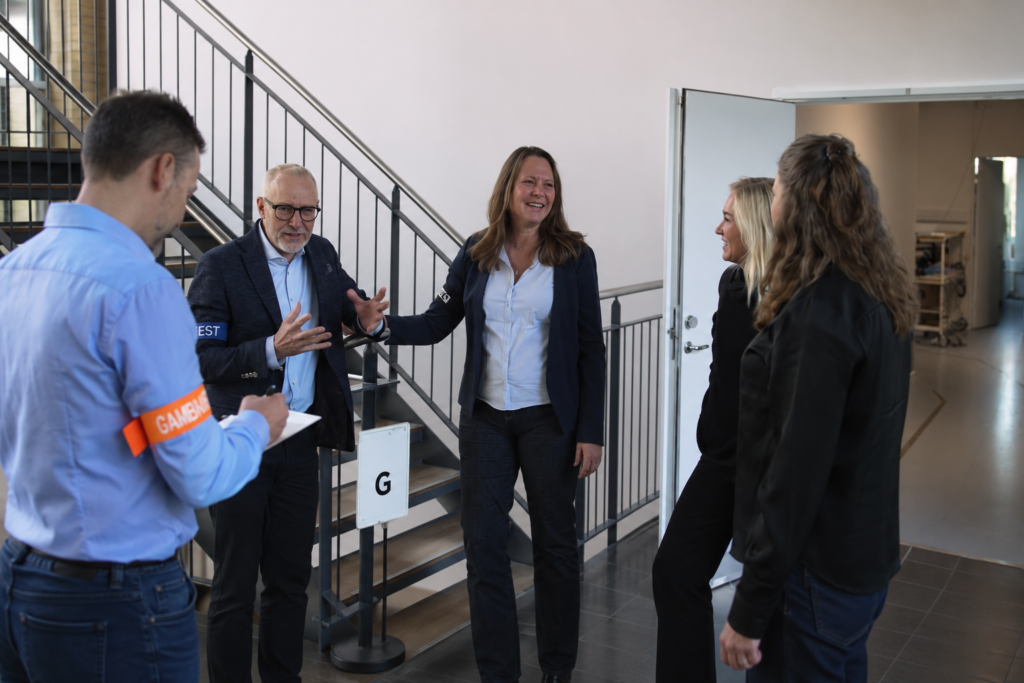
And you'll learn first aid, too...
And then there’s the first aid. It isn’t an afterthought – it’s what gives the whole thing its weight. You get your first aid course – while the team gets better at working together. And you can also get a course certificate for every participant. It isn’t just something ticked off. It’s something that can save a life.
And it’s something your people take with them – not just at work, but at football practice, at the campsite and at home on the sofa the evening it counts.
And the day it counts, it won’t be you standing closest. It’ll be them. And they’ll be standing there as a team.
Want to see how a team-building day and your own rhythm of micro-training can be put together? Book a call and we’ll show you an example. We tailor the course and the day precisely to your needs – both the scenarios and the length.
next step
See what a day could look like for your team
Tell us a little about your team, and we’ll show you an example of a team-building day and a micro-training rhythm that fits your everyday work.
On the call, you’ll get
- A concrete example of how the day runs
- Scenarios that fit your workplace
- A suggestion for how often you can train afterwards
The call is free, with no obligation.
From real life
… our staff have significantly increased their confidence, decisiveness, and ability to take action.
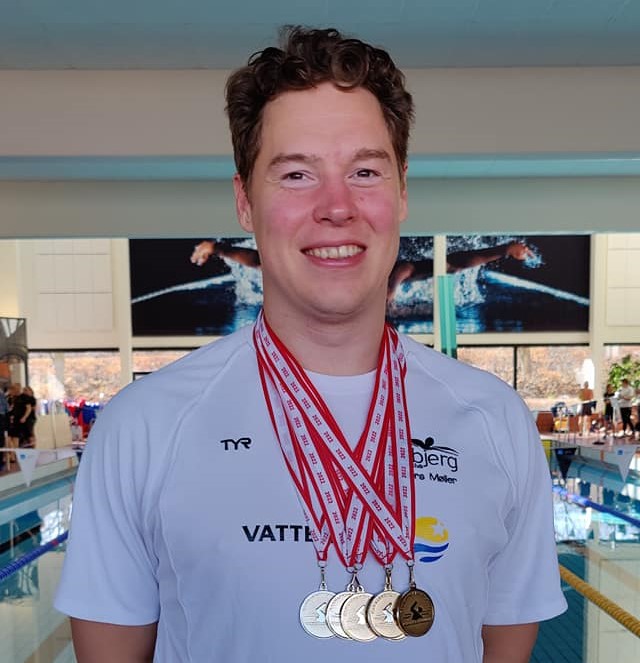
Anders Møller Bilander
Operations Manager at Gentofte LIFE
Learn more about Action-cards®
The solution has five parts. Here are the ones that fit team building.
First Aid Course with Action-cards®
Your team learns safe first aid with the cards – and keeps it fresh with micro-training.
Action-cards®
Physical cards that guide you step by step through 15+ scenarios. No app, no internet.